Mortgage life insurance is a policy designed to pay off your mortgage in the event of your death or disability. Commonly, the policy has a decreasing benefit (face) amount that decreases proportionately to the decreasing balance of your mortgage. You, as the policyholder, name a spouse or someone else as the beneficiary so that they can pay off the mortgage in one lump sum. Alternatively, your beneficiary can keep the death benefit and continue making monthly mortgage payments.
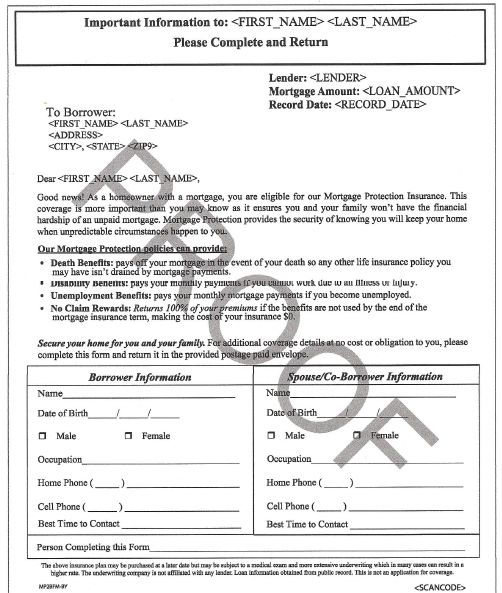
There will be a lot of letters when you purchase an apartment as well as refinance your mortgage. These mortgage protection insurance appear to be official. They include the name of the lender as well as the mortgage amount. Life insurance agencies and companies have access to this public, accessible information and then send letters or postcards. If you notice the name of your mortgage company upon the notice, this could appear legitimate. Some believe that they're required to act.
While it's crucial to identify the warning signs of insurance fraud involving mortgages, It's equally important to be aware that most offers are genuine. If you're interested in this kind of insurance, follow the tips listed below when filling out an interest form or make a call to ensure the company is authentic and trustworthy.
Alongside making you aware of the need for life insurance, Mortgage Policies on life can also be an excellent deal for specific individuals. Check out the following article to determine whether you're among those who think this product is suitable.
It's an excellent idea for anyone with a family dependent on income to carry an insurance policy for life; that is the term. This is the kind of Mortgage protection policy.

Nobody likes to get inundated with offers for the same product – especially when the recommendations can be somewhat misleading. However, most people are underinsured when it comes to life insurance. The recommendations in the mail can serve as reminders – alerting you to a need for coverage. Taking on a large debt should cause you to reevaluate your life insurance.
Everyone hates being bombarded with offers on the same product, mainly when the suggestions are somewhat confusing. But, most people aren't insured in the area of life insurance. The mailer recommendations could serve as reminders, informing you of the requirement for coverage. The prospect of taking on a significant debt should prompt you to reconsider how much life insurance is.
Scammers could use public data to contact potential victims, as in the example postcard below. Scammers may want your money, but many are also looking for your personal information to commit identity theft, so more than your money is at stake.
The majority of Life insurance for mortgages includes riders for disability insurance as well as Return of Premium. The disability insurance rider is designed to help pay the mortgage if you are disabled due to an injury or illness. The disability riders in these plans are typically not particularly robust. The concept of disability states that one needs to be severely disabled to be eligible for benefits.
You'll receive many mailers when you purchase the house you want and refinance or repay your mortgage. These mortgage protection insurance appear to be official. They mention the name of your lender and how much you owe on your mortgage. Life insurance agencies and companies get this free public information and mail out letters or postcards. If you notice the name of your mortgage company in the document, it may appear official. Many people believe they're obliged to act.
Is mortgage protection insurance tax deductible?
No. Typically, mortgage protection life insurance premiums are not tax deductible.
PMI is typically required on a conventional mortgage if your down payment is less than 20 percent of the home's value. Mortgage protection insurance, on the other hand, is entirely optional.